Women played important roles throughout the Hundred Years War. Queens, duchesses and noblewomen exercised political influence, defended territories and maintained claims to land and inheritance. Others became directly involved in military affairs, while women such as Joan of Arc and her contemporaries acquired influence through their roles in the French campaigns of the fifteenth century.

This page provides an index to the women of the Hundred Years War covered on this website. Their lives and activities illustrate the many different ways in which women could influence the course of the conflict, from politics and diplomacy to warfare, religious visions and the defence of towns and territories.
Women who shaped the Hundred Years War
Queens of England
- Isabella of France, r. 1308–1327
- Philippa of Hainault, r. 1328–1369
- Anne of Bohemia, r. 1382–1394
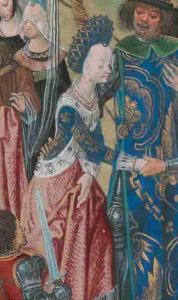
- Isabella of Valois, r. 1396–1399
- Joan of Navarre, r. 1403–1413
- Catherine of Valois, r. 1420–1422
- Margaret of Anjou, r. 1445–1461 and 1470–1471
Queens of France
- Joan of Burgundy, r. 1328–1349
- Blanche of Navarre, r. 1350
- Joanna of Auvergne, r. 1350–1360
![Jeanne [Joanna] of Bourbon, Queen Consort of Charles V of France. Crowned in 1364 during the Hundred Years War.](https://thehundredyearswar.co.uk/wp-content/uploads/2026/09/Joanna_of_Bourbon.jpg)
- Joanna of Bourbon, r. 1364–1378
- Isabeau of Bavaria, r. 1385–1422
- Marie of Anjou, r. 1422–1461
Women and Political Power
- Alice Perrers
- Eleanor Cobham
- Dame Alice de Bryene of Acton Hall
- Agnes Sorel
- Yolande of Aragon
- Katherine Swynford
- Eleanor de Bohun, Duchess of Gloucester
- Jacqueline, Countess of Hainault
- Jeanne de Penthièvre, Duchess of Brittany
- Margaret of Bavaria
Women and Warfare
- Joanna of Flanders
- Jeanne de Clisson, The Lioness of Brittany
- Julienne du Guesclin, Warrior Nun
- ‘Black Agnes’ Randolph
Joan of Arc and Her Contemporaries
Religious and Literary Figures
- Katherine of Sutton, Abbess of Barking
- Christine de Pizan
- Julian of Norwich
- Jeanne Daubenton