The Treaty of Guillon, signed 10 March 1360, saw the Duke of Burgundy agree terms with the English that applied only to his Duchy. The terms referred to the issue of Edward IIIs claim to the throne of France and saw the Burgundian Council agree to make a payment to Edward in return for the end of hostilities between the English and the Duchy. It was an early example of the Duchy acting independently of the Kingdom of France in its dealings with England.
Siege of Rheims
In January 1360 Edward IIIs campaign in France took a new direction. His siege at Rheims had faltered due to logistical issues. Now, he set about a new and ambitious plan. From Rheims he was to march his army south, looping around Paris before marching north again toward Honfleur. From this position the next phase of his campaign could begin. Edward intended to ensure that his army did not fall foul of supply problems again. An enlarged garrison at Honfleur would be able to protect supplies from England. Forces were then assigned with foraging missions in Lower Normandy. The two could then supply Edward’s men via land or the River Seine as his expedition advanced.
The English faced little organised opposition but there was guerrilla type tactic deployed against them: this resulted in the famous poet Geoffrey Chaucer being captured and held to ransom. The area south of Paris was laid waste by the English. Large areas around Orléans and Auxerre were devastated. Then, Edward marched directly toward Burgundy.
Edward III marched on Burgundy
Burgundy was ill prepared to fight the English at this moment in time, nor were the Council and Duke willing to see their territories devastated in the same way that they knew their neighbours had been. The Estates of Burgundy met at the convent of St. Benige and agreed to terms that Edward had stated in diplomatic exchanges.
Treaty of Guillon
Burgundy was to pay 200,000 moutons. This was to be paid in instalments. Edward agreed to remove the English Free Company led by Nicholas Tamworth from Flavigny, and Tamworth was allowed to sell the town of Courcelles back to the Burgundians. The truce also stated that if Edward was crowned King of France, he would be allowed to take up arms against the Duke of Burgundy if he was still a minor. The Treaty was signed at Guillon on 10 March 1360. Edward and the English then turned and marched towards Paris.
Image Credit
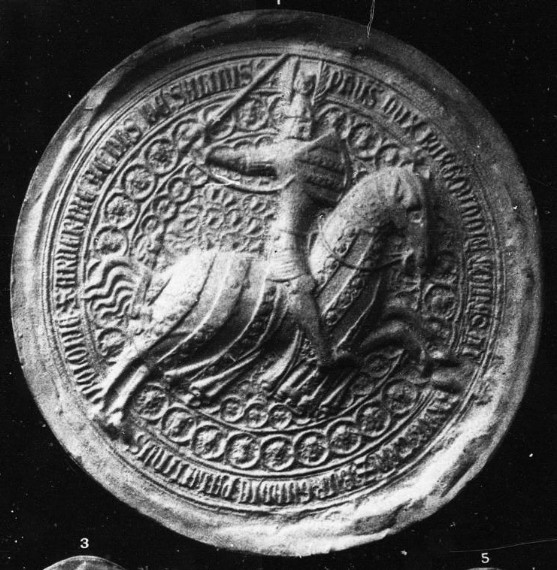
Philip I of Burgundy. Source Wikipedia.
