Richard II ruled England from 1377 until his deposition in 1399. His reign marked an important change in the Hundred Years War, as England and France increasingly moved from prolonged warfare towards negotiated truces and diplomacy.
Richard’s marriage to Isabella of France and the extension of the Truce of Leulinghem in 1396 created a period of relative peace with France. His deposition by Henry Bolingbroke in 1399 brought this period to an end and created political consequences that continued to shape English history throughout the fifteenth century.
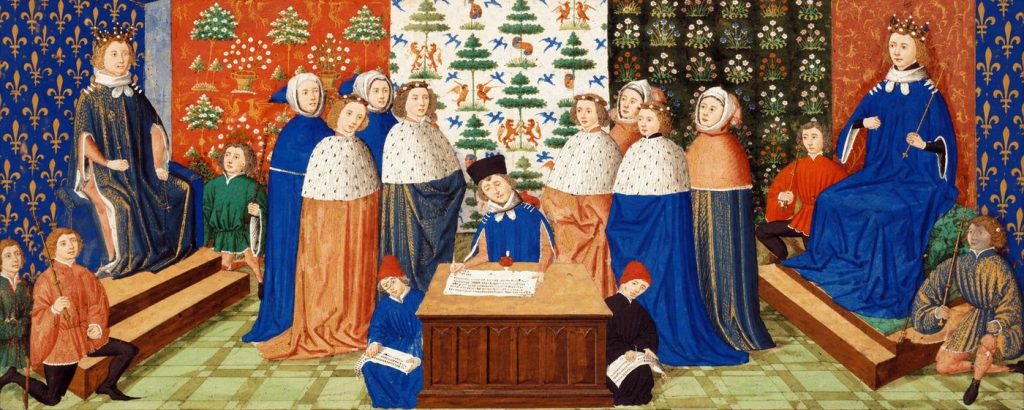
Richard II and the Hundred Years War
Richard II’s Accession
Richard became king in 1377 following the death of his grandfather, Edward III, and the earlier death of his father, Edward the Black Prince. His accession came during an ongoing phase of the Hundred Years War, although the balance between military campaigning and diplomacy changed significantly during his reign.
The Lords Appellant and the War in France
The Lords Appellant emerged from opposition to Richard II’s government in the 1380s. Their criticisms were closely connected to the conduct of the war with France, including concerns over military leadership, royal favourites and the resources being used to prosecute the conflict. Their victory over Richard’s government in 1388 temporarily placed royal policy under their influence.
Scotland and the Wider War
Scotland remained an important factor in the Hundred Years War during Richard II’s reign. The continuing alliance between Scotland and France meant that English rulers had to consider the northern frontier alongside the war in France. Richard’s reign included renewed conflict with Scotland, including the English invasion of 1385 and the Scottish campaign of 1388.
From War to Truce
Richard pursued a more conciliatory policy towards France than had characterised the earlier reigns of Edward III and the Black Prince. The Truce of Leulinghem, first agreed in 1389, provided a framework for negotiations and was subsequently extended.
Richard II and Charles VI
Richard’s diplomacy brought him into direct contact with Charles VI of France. The two kings met during negotiations in 1396, while Richard’s marriage to Charles’s daughter, Isabella of France, formed part of the wider diplomatic settlement between England and France.
Relative Peace
The period created by the truces and diplomatic agreements was significant because it represented the longest sustained period of peace between England and France during the era of the Hundred Years War. The peace eventually broke down after Richard’s deposition and the changing political circumstances of the early fifteenth century.
The Deposition of Richard II
Richard’s reign ended in 1399 when his cousin, Henry Bolingbroke, returned to England and seized power. Richard was deposed and Henry became King Henry IV. The overthrow created a disputed transfer of power whose consequences extended well beyond Richard’s lifetime.
Richard II and the Fifteenth Century
The deposition of Richard II became an important part of the political background to the fifteenth century. Opposition to Henry IV included attempts to restore Richard, while questions surrounding the legitimacy of the Lancastrian succession later contributed to arguments over the rights of the Mortimer and Yorkist lines.
Further Reading
- Christopher Phillpotts, The fate of the truce of Paris, 1396–1415, Journal of Medieval History, 24.1 (1998), pp. 61–80.
- Christopher Phillpotts, John of Gaunt and English policy towards France 1389–1395, Journal of Medieval History, 16.4 (1990), pp. 363–386.