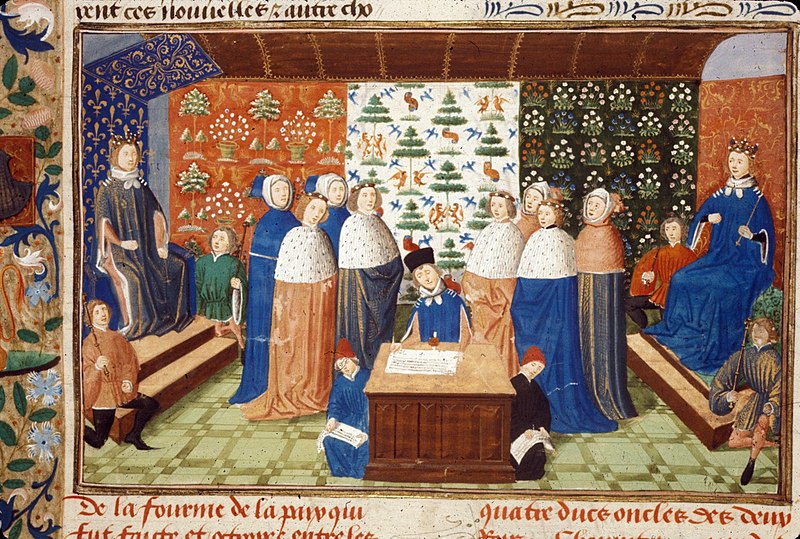
On 9 March 1396 an Extension was agreed between England and France to the Truce of Leulinghem. The Truce of Leulinghem had been signed in 1389. It was revisited at several points to extend, or alter, arrangements between the English and French. Richard II of England opted for a policy of peace, despite some of his most senior advisors arguing for a return to war at some points.
Ongoing Peace Talks
Richard and Charles had made promises to meet some two years earlier. This had followed a period of peace, but indifference towards formalising a peace. Richard II chose to reopen negotiations which were on two counts, the marriage contract, and the settlement of the issues pertaining to Aquitaine and the owed ransom for King John II. The diplomats managed to bring the kings together on 9 March 1396.
Extension to the Truce of Leulinghem recounted in Walsingham’s Chronicle:
“At that time the kings of England and France met together in accordance with the agreement previously signed between them [On 9th March 1396]. The place appointed for their conference was just outside Calais [Ardes] where the tents of both kings were set up in splendid fashion. Before the discussion, they provided the following corporal oath in the presence of all as a pledge of their loyalty to a genuine peace:
“We, Charles, king of France, swear in a king’s words on the gospels of ourselves, all our subjects, friends, relations and well-wishers that neither we nor any of them will cause or allow to happen any kind of loss, interference, trouble, disturbance, or check to our son, the king of England, or to any of his subjects, friends, relations or well-wishers, either during the time of our conference or for eight days beforehand or seven days afterwards. And if by any chance any person on our side exhibits insolent or litigious behaviour – which God forbid! – we promise in a king’s words according to the pledge just given that we shall cause this behaviour to be duly amended and altered without delay. And we further swear as part of the pledge just given that if any individual or group of any class or condition wishes to oppose the pledge we have given, we shall help our son to the best of our ability to resist the malice of such evil people and to protect our son and his people as best we and our people know how. As above we swear and promise to hold to all this and to carry it out without deceit or malicious intent.”
The peace between England and France continued until the truce was repudiated by the French in 1402. The period from the first agreement at Leulinghem to that repudiation was the longest period of peace between England and France within the era known as the Hundred Years War.
Image Credit
Charles VI, King of France, and Richard II, King of England, sign a truce in 1389, illustration from Harley manuscript of Jean Froissart’s Chronicles.