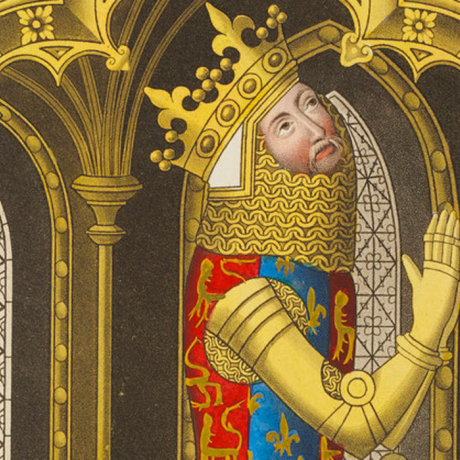
On 27 February 1339, Thomas Hatfield, the bishop of Durham, paid a John de Lentele 2400l for the return of the Great Crown of England. To do this, he had secured a loan from Italian bankers of 16000 florins. It was part of a series of interlinked financial transactions that used the crown jewels as a means of gaining credit for Edward IIIs expeditions in France.
The Crown and Edward III’s use of credit
Edward had used the crown jewels as England’s tax system was inefficient. Of 20000 sacks of wool that Parliament had granted the king, just 1846 had been delivered. The value of the wool was to be Edward’s bargaining power. Without the wool, he needed to turn to the credit market.
Paying off the debt to John de Lentele just part of the sequence of events. Edward moved the debts around to suit his political ambitions. At this time he was courting Sigismund, the Holy Roman Emperor and the German Princes.
Related: How did Edward III finance the Hundred Years War?
Money Matters
He wanted to launch a campaign against France with German backing. The German Princes wanted financial assurances, and debts repaying. Emperor Sigismund was an astute politician and sent an embassy to the French, with a view to agreeing better terms with them. Edward III was faced with a scenario in which the very people he intended to ally with could easily be lured into a pact against him. It was a matter of money.
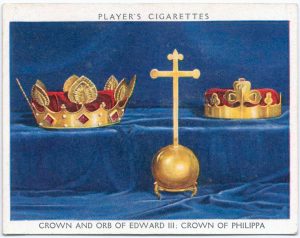
Great Crown of England used as surety against a loan
Therefore he recovered the Great Crown from John de Lentele. It was needed to enable debts with important German figures to be managed to the satisfaction of all. His other sources of loans had already been stretched to the limit of the credit they could, or would, offer.
From September of 1338 Edward went of a diplomatic progress through the German states. He lavished gifts and promised favour. Loan repayments were negotiated and agreed. The Archbishop of Trier, owed a substantial amount, was satisfied. Edward was to make repayments in Spring of 1339.
The Archbishop was willing to renegotiate because King Edward left the Great Crown of England as surety for the debts owed. Edward then needed to maintain payments to gain support for his cause, and to recover his crown.
In October 1338, the German Princes met at Coblenz. It agreed to support Edward and elected him as an Imperial Vicar.