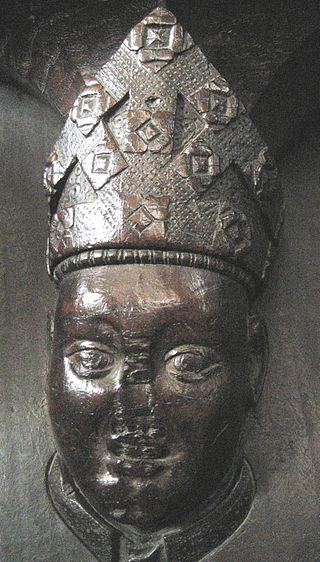
On 7 March 1383 Parliament backed the Bishop of Norwich’s Crusade. The Despenser Crusade was proposed to take place against supporters of the Anti-Pope Clement VII in Flanders. The campaign was one with theological, political, and military arguments for it within England. The proposal was for a Crusade in support of the city of Ghent. Whilst defeating the anti-pope’s supporters was a key objective, the campaign was also mooted amid a slump in English wool exports to the Low Countries, providing a major economic incentive to peers to support the initiative in lieu of improved economic benefits.
Who should lead a ‘Crusade’ into the Low Countries?
There was, however, disagreement over who should command, and how such a Crusade should be financed. The Chronicle of Thomas Walsingham describes the debate:
“During Lent a parliament was held in London, at which there was a discussion for several days about the powers granted by the pope to the bishop of Norwich and about the expedition against the schismatics. People felt differently on the matter. For some, whose hearts had been touched by God, wanted the bishop to proceed as the champion of the church against the enemies of Christ, while others strongly opposed the expedition, claiming that it was not safe to entrust the people of the king and his kingdom to an inexperienced priest. And so there was a split between them. For this reason, discussion of this affair of the bishop and at the same time of the whole church was postponed until the Saturday on which the universal church makes special mention of the passion and cross of our Lord [7th March 1383].
There was much shilly-shallying by the leaders of the kingdom, and several arguments against the expedition were advance by the earls, barons and magnates of the land in great numbers. But these were completely crushed by the power of God and the praiseworthy steadfastness of the knights in parliament, so that at last, on that very Saturday… the whole assembly… made its decision in accordance with the wishes of the crusading bishop…”
Parliamentary Backing for the Despenser Crusade
Parliament backed the Crusade at this point through the allocation of taxes. As a tax had already been approved but not yet collected, it was possible to divert funds to Despenser.
The Higher tax granted to the King the previous year was allocated to the Bishop of Norwich. A second tax agreed by the church, was then reallocated to the King for the Keeping of the Seas.
The disagreements over the crusade led to fractured organisation of its planning. Even when it was decided that the king himself should lead, it didn’t happen due to people pulling in different directions.